Collection: Producer Spotlight: Bibi Graetz
The Expressionist of Tuscany
"We dream and are trying to create a modern metaphysic atmosphere around us which we can create at an artist level." — Bibi Graetz
※
There is nothing new about conceiving of wine production as an art form... It is, in many ways, a realm of painting, where the diversity of tone is found in shades of red and white alone. It is not necessary for a wine-maker to consider themselves an artist; but for Bibi Graetz to see this corollary is more natural, given his origins as a painter in the more literal use of the word.
His grandfather was a painter, his father an architect, and he inherited this flame, attending thereafter the Firenze Accademia Belle Arti, working primarily with glass as his medium. He continued to paint, and in 2000, the vibrant colours of his family's vineyard fell onto his pallet, an act of kismet which he embraced, saying himself: 'I could not pull myself away from creating wines.

When our Head of Operations, Sophie Burleigh, visited Graetz's winery back in 2024, everything we loved about this producer was confirmed and enhanced, which you can read more about here.
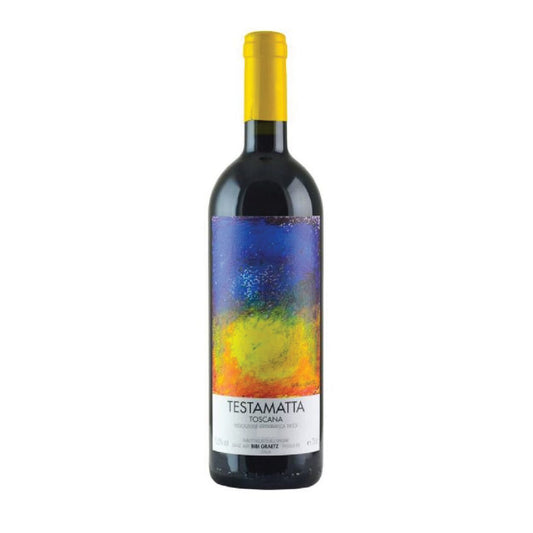
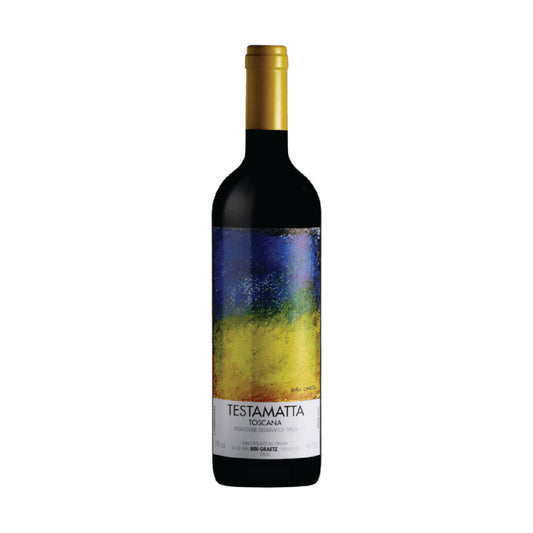
His traces are evident in every inch of his oenological canvas: labels, names, grapes, vineyards, techniques... Each wine is prefaced by a painting on its bottle, each parcel of land is treated as a colour or tone; meticulously blended by the tutelage of the heart, not the mind; the names reflect his colourful spirit: Colore, the highest artistic expression of his wines, translates to 'Colour'; Testamatta, his flagship experiment with old vines, lesser-used grapes, and new techniques, translates to 'Crazyhead'; Casamatta, the accessible house wine, translates to 'Crazyhouse', and Soffocone, an succulent, opulent expression of hillside Sangiovese translates to... — well, you can google that one!
As with all art, there is an inherent streak of anarchistic rebellion, and in Graetz's pursuit of pure and artistically driven wine-making, he abandons all DOC and DOCG regulations, chasing with a creative's hunger those wines which come out of him, instead of those expected of him; any semblance of tradition (of which there are some), are their purely through their incorporation and influence on him, as opposed to be being blindly adhered. As such, we find wines of character, style, boldness, but nonetheless with a strong tie to the soil from which they came, from which Bibi came, and to which we turn our minds and mouths.
-
Bibi Graetz, Testamatta 2013
Regular price £105.99 - £390.00Regular priceUnit price per -
Bibi Graetz, Colore 2011
Regular price £360.00Regular priceUnit price per -
Bibi Graetz, Testamatta 2015
Regular price £80.00 - £440.00Regular priceUnit price per